Milestones & Motor Development · August 26, 2026 · 6 min read
How to Start Tummy Time With a Newborn: A Pediatric PT's Guide
Written by Kristi Brelsford, DPT, PCS

By Dr. Kristi Brelsford, pediatric physical therapist and founder of The Village SLC
If you’re wondering how to start tummy time with a newborn, here’s what I recommend as both a pediatric PT and a mom who did this herself!
Tummy time is essential for:
- Developing muscles in your baby’s neck and shoulders.
- Preventing neck tightness (torticollis) and flat spots on the side (plagiocephaly) or back (brachycephaly) of their head.
- Building muscles to prepare for motor milestones like rolling, sitting, crawling, and walking!
Many babies need to work their way up to loving tummy time. Often, once babies learn they can explore their environment more in this position and play, they start to love it (but, all babies are entitled to their own opinions, right?). Tummy time looks different at each age and stage with your baby!
What if my baby hates tummy time?
If your baby absolutely HATES tummy time, sometimes all they need is more exposure or alternate strategies to make it more fun or easier. But, sometimes other things are going on like reflux, body tension, tongue tie, torticollis, etc making your baby uncomfortable in this position. If this is the case, a pediatric physical therapist can do a full evaluation to determine what is holding them back during tummy time.
If you are in the Salt Lake Valley, I offer in-home visits and would love to work with you — reach out to get started!
When should you start tummy time? The newborn stage
I started chest to chest tummy time with my son almost immediately after birth. Chest to chest definitely counts in my opinion! Tummy time with your baby on your chest with your skin and baby’s skin exposed, called “skin to skin” is incredibly powerful. Skin to skin is very bonding and has many positive health benefits for mom and baby, including regulating baby’s heart rate, breathing and temperature. This position is often very soothing to babies as it gives them deep input to the front of their body.
Most babies need to work their way up to tolerating extended time on their tummy. Starting with short intervals on their tummy and gradually increasing time in this position is usually key. I usually start with 2-5 minutes a few times per day while baby is awake and supervised. Newborns typically do not have head control and therefore are at risk for their airway being blocked when face down, that is why awake and supervised is key.
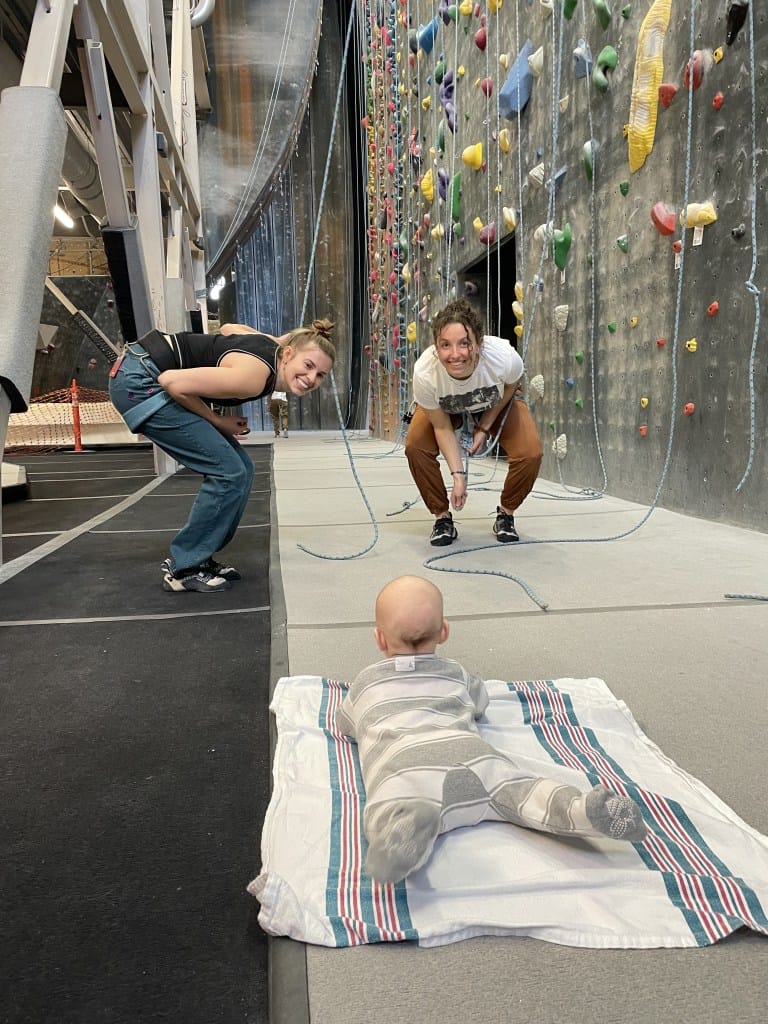
I started tummy time on the floor the first day home from the hospital with my son. I love doing tummy time on the floor on a rug or padded carpet with a clean towel or blanket rolled out for young babies.
An important skill to look out for in tummy time is attempting to lift their head (even a second counts) and ability to turn their head both ways, to clear their airway (want to see these skills by one month but often full-term newborn babies can do these skills).

Start chest to chest
Begin right away with baby on your chest, skin to skin when possible. As long as baby is off the back of their head and practicing lifting it, it counts.
Keep sessions short, awake, and supervised
Start with 2-5 minutes a few times per day while baby is awake and supervised. Newborns lack head control, so never leave them face down unattended.
Move to the floor
Roll out a clean towel or blanket on a rug or padded carpet. An incline or a rolled towel under the chest makes it easier.
Build up gradually
Work toward about 30 minutes of total tummy time per day by 2 months. Short intervals add up.
Keep it interesting
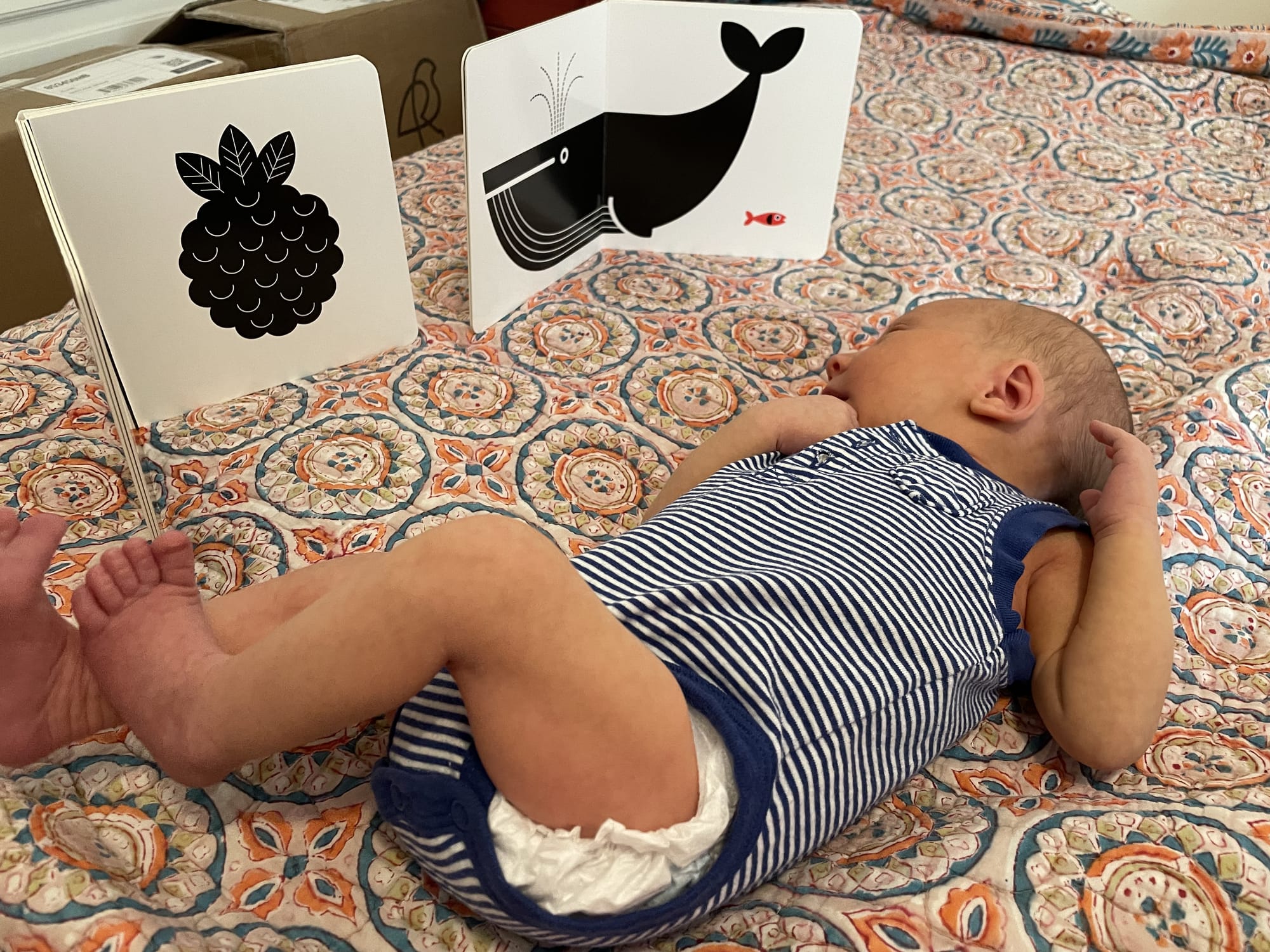
Use mirrors, your face, siblings, or high-contrast cards, and change environments to keep baby engaged.
0-3 months
Full term babies positioning in-utero (in mama’s tummy) is called ‘physiological flexion’, which basically means their spine in a C-shape curved inward with their arms and legs tucked up close to their body. Some people may think of this as the ‘fetal position’.

At first in tummy time, baby’s weight is shifted further forward towards their shoulders since their body is used to being curved forward. As they spend time on their tummy, their spine and back muscles gradually become stretched and their weight slowly starts shifting back towards their hips as they become stronger. This weight shift is often paired with more head control and a stronger neck.
So, you will see a distinct difference in posture and position of tummy time from babies one month old to three months old as a baby gets stronger and practices tummy time.
By 2 months a good goal to aim for is at least 30 minutes of tummy time daily (2-5 minutes at a time works), but this can be in intervals, every little bit adds up!
By 3 months, baby may be pushing through their forearms and able to lift their head up, hold it up and look around to watch people or toys moving.
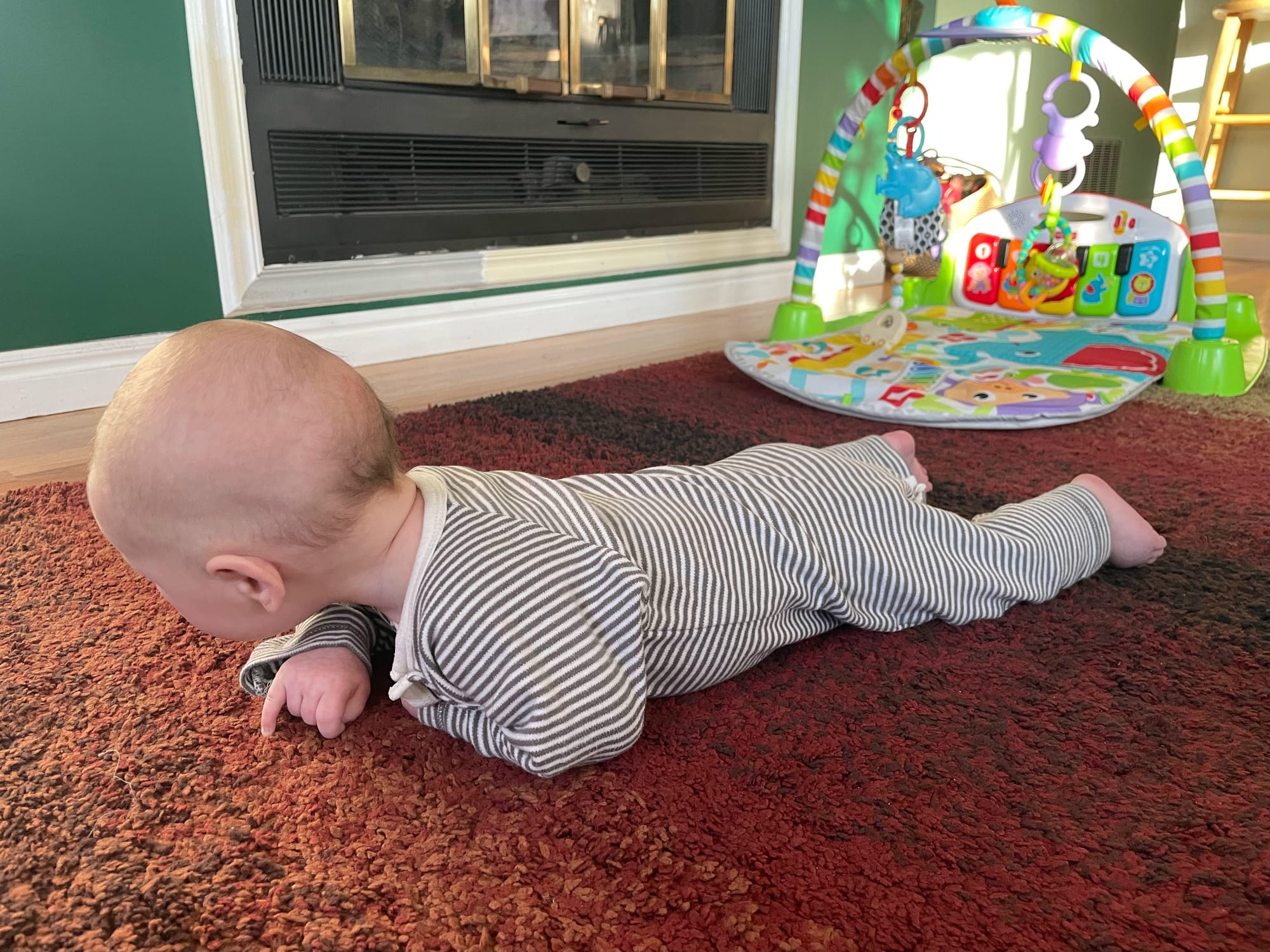
4-6 months
By 4 months, holding baby’s head up may seem easier and they can hold it for longer periods. Baby may push through their forearms enough to lift their chest partially off the floor.
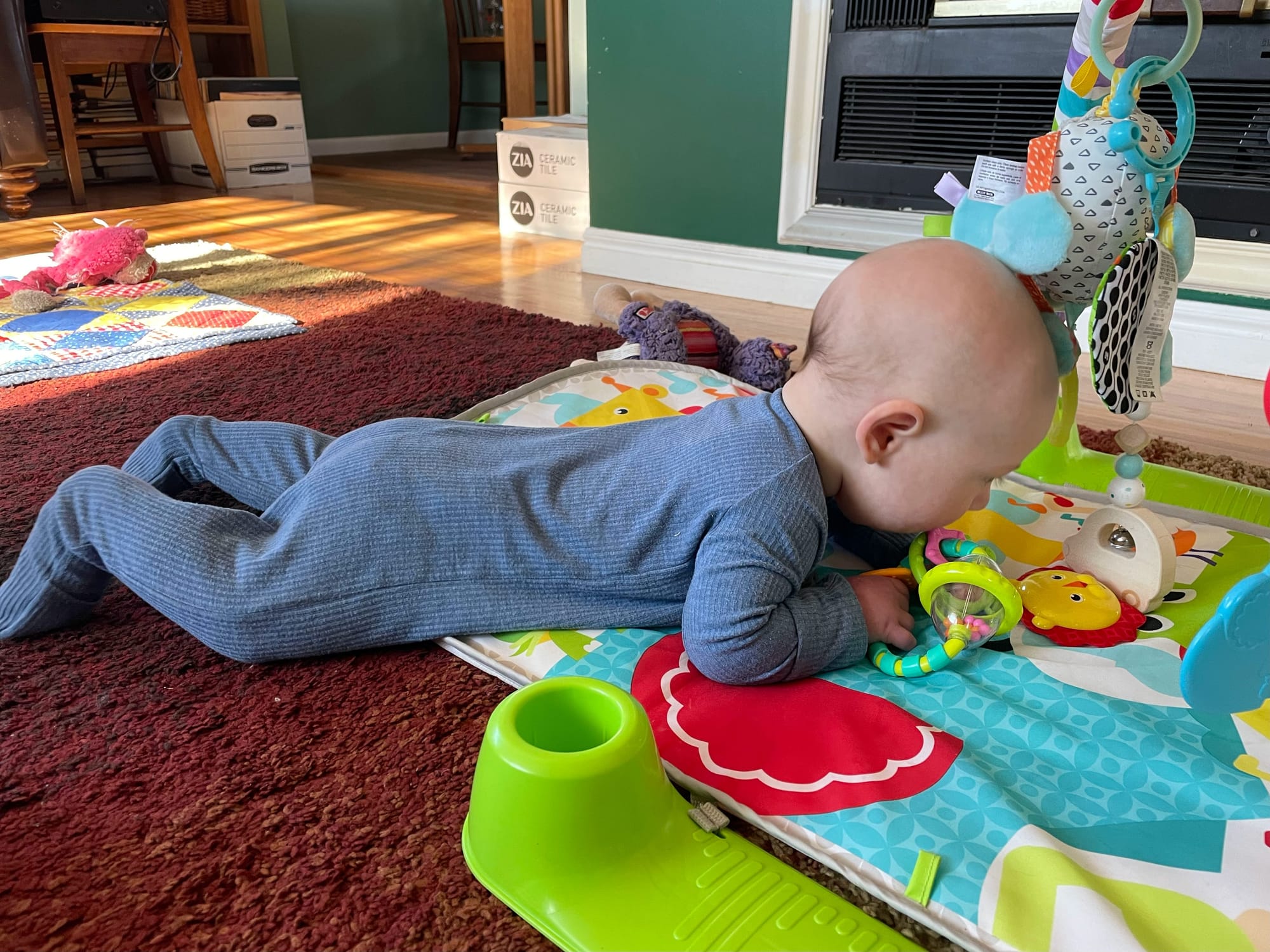
By 5 months, baby may be able to hold their body up with straighter elbows, and start to reach for toys while on their tummy.
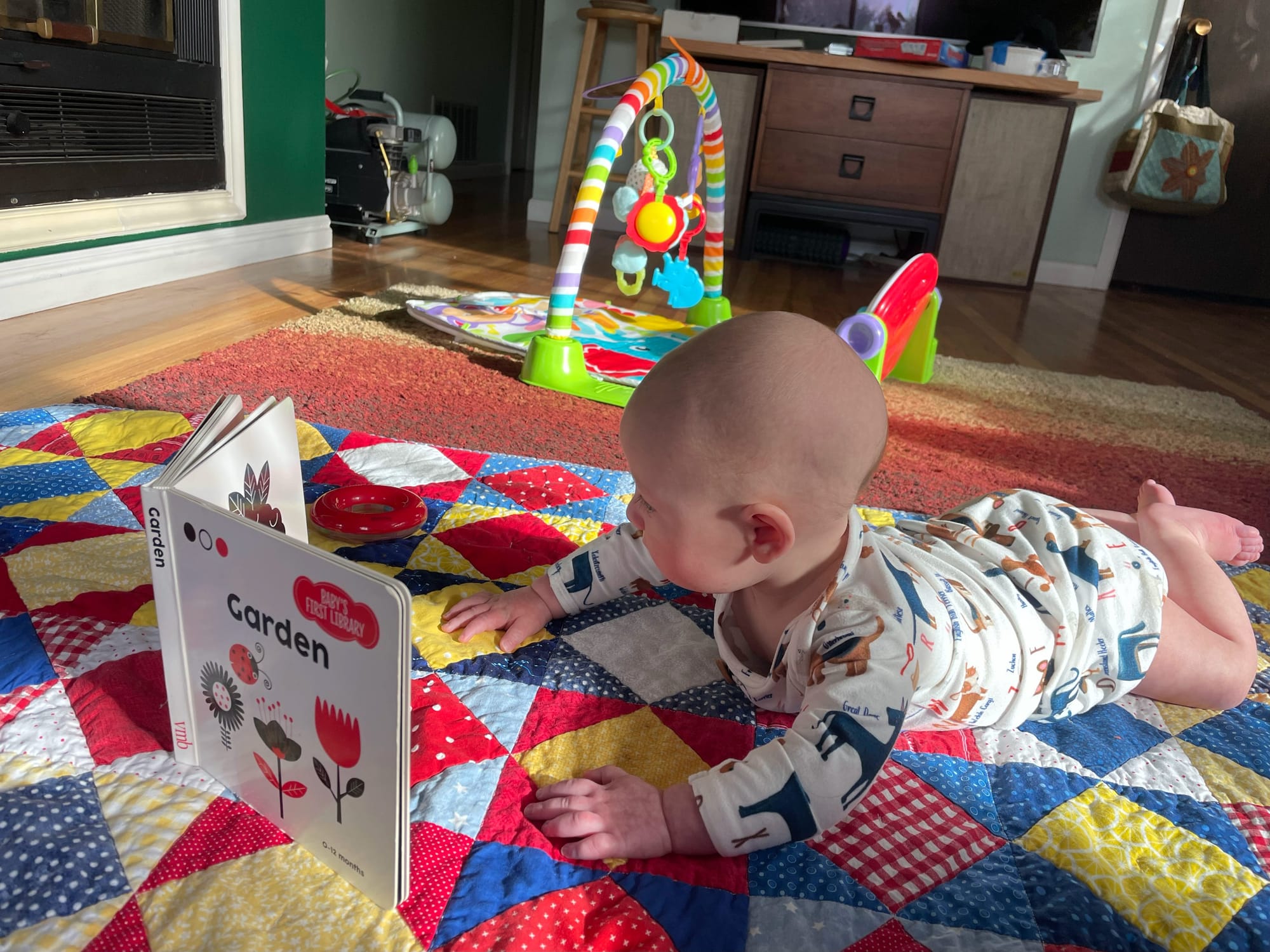
By 6 months, baby may hold their body up with straight arms, to pivot in a circle on their tummy and roll over tummy>back and back>tummy.
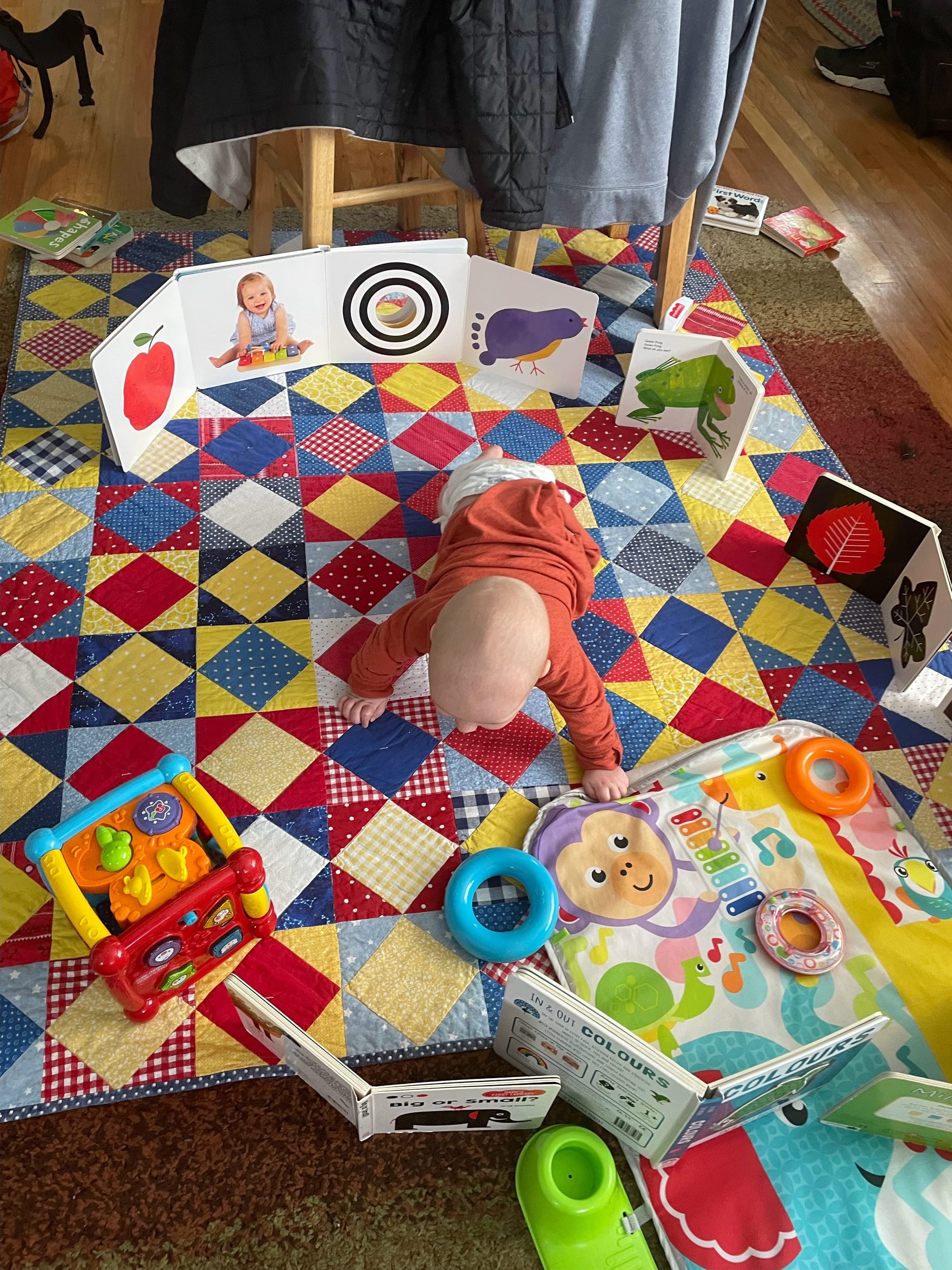
Once your baby can roll by themselves, they may roll off their tummy every time you place them there and that’s ok! Once baby rolls independently both ways, encourage them to go towards toys or people so they can learn independent movement. This usually helps encourage rolling because they learn they can go places!
Once baby has independent movement, baby proofing your space is really important to keep baby safe!
Tips and tricks to make tummy time more fun
- Inclined positioning can help if baby has reflux or weakness (for example a removable couch cushion on the floor propped up to make an incline or on your chest or legs with their head up higher than their feet)
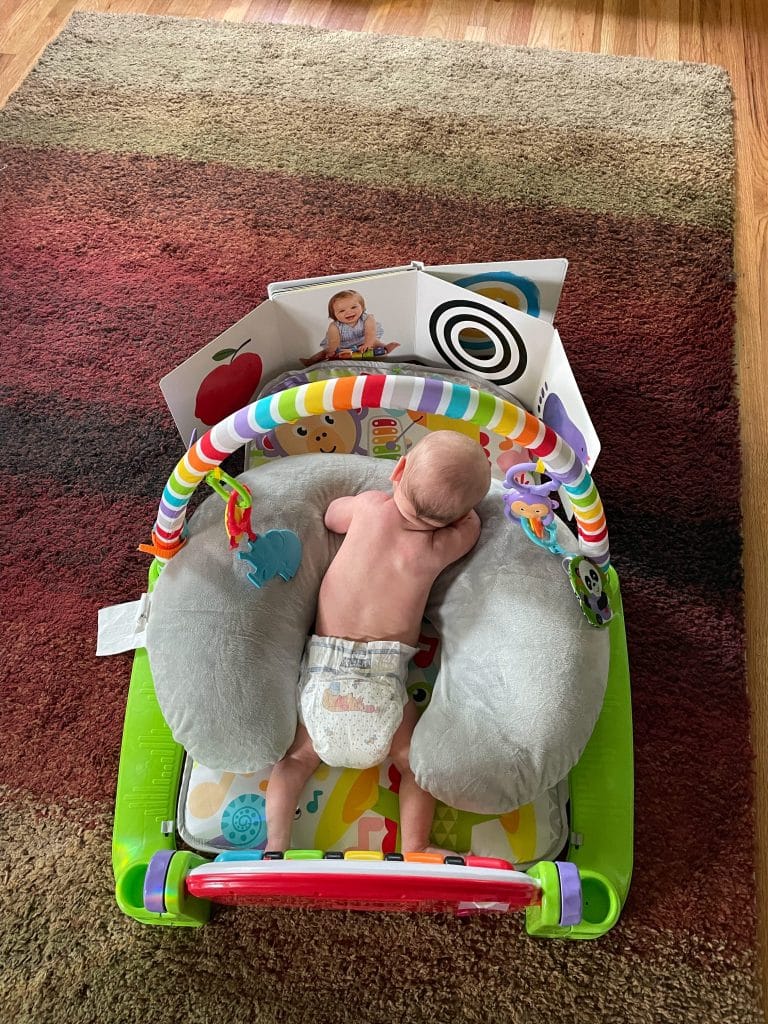
- Baby’s head is heavy and to make it easier, you can lift baby’s head by placing a rolled towel/blanket under their chest (around nipple height) or a boppy pillow.
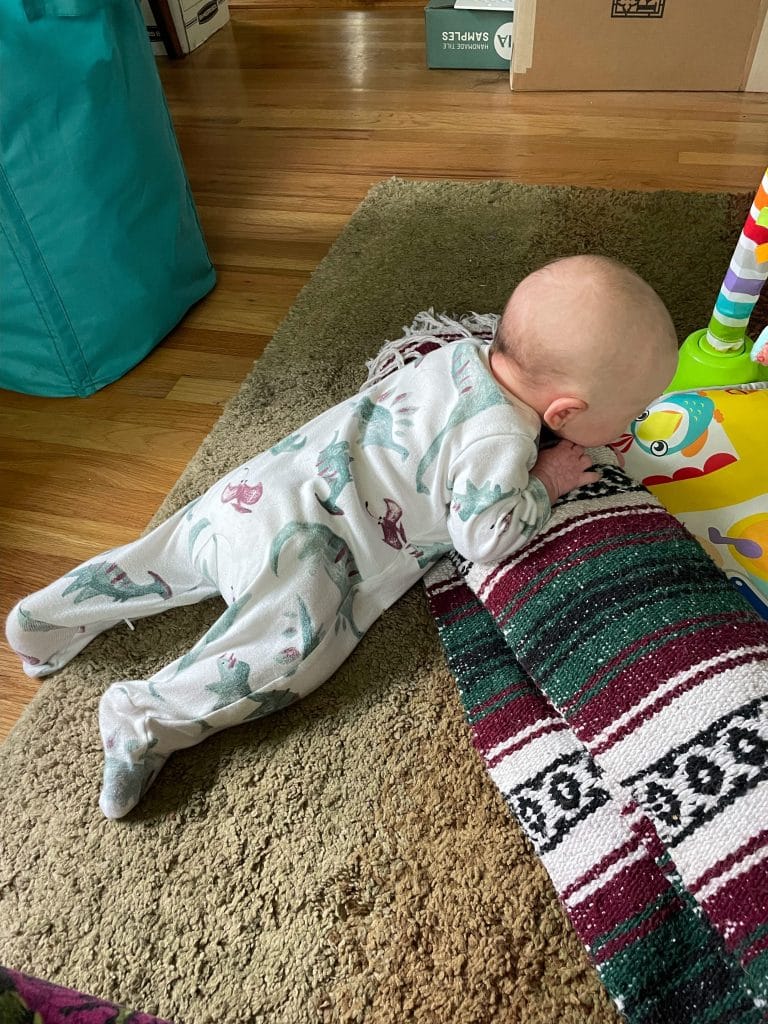
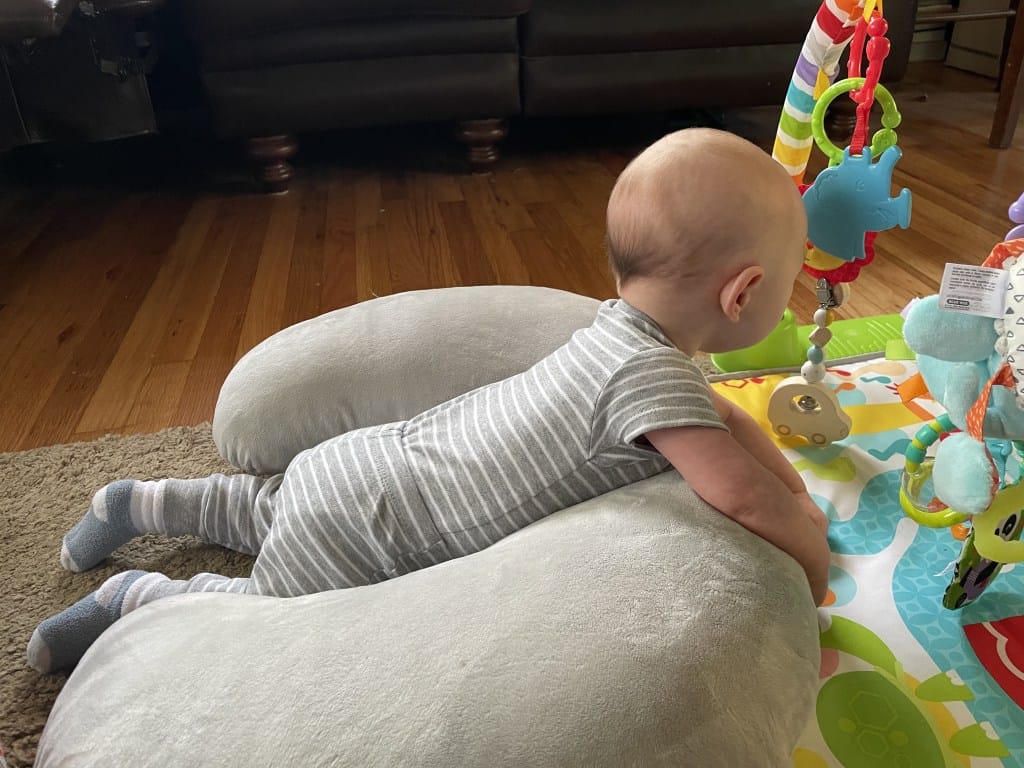
- Give them something interesting to look at! It can help keep them engaged on their tummy longer. Mirrors, your face, their siblings, or high contrast (black and white) cards/books.
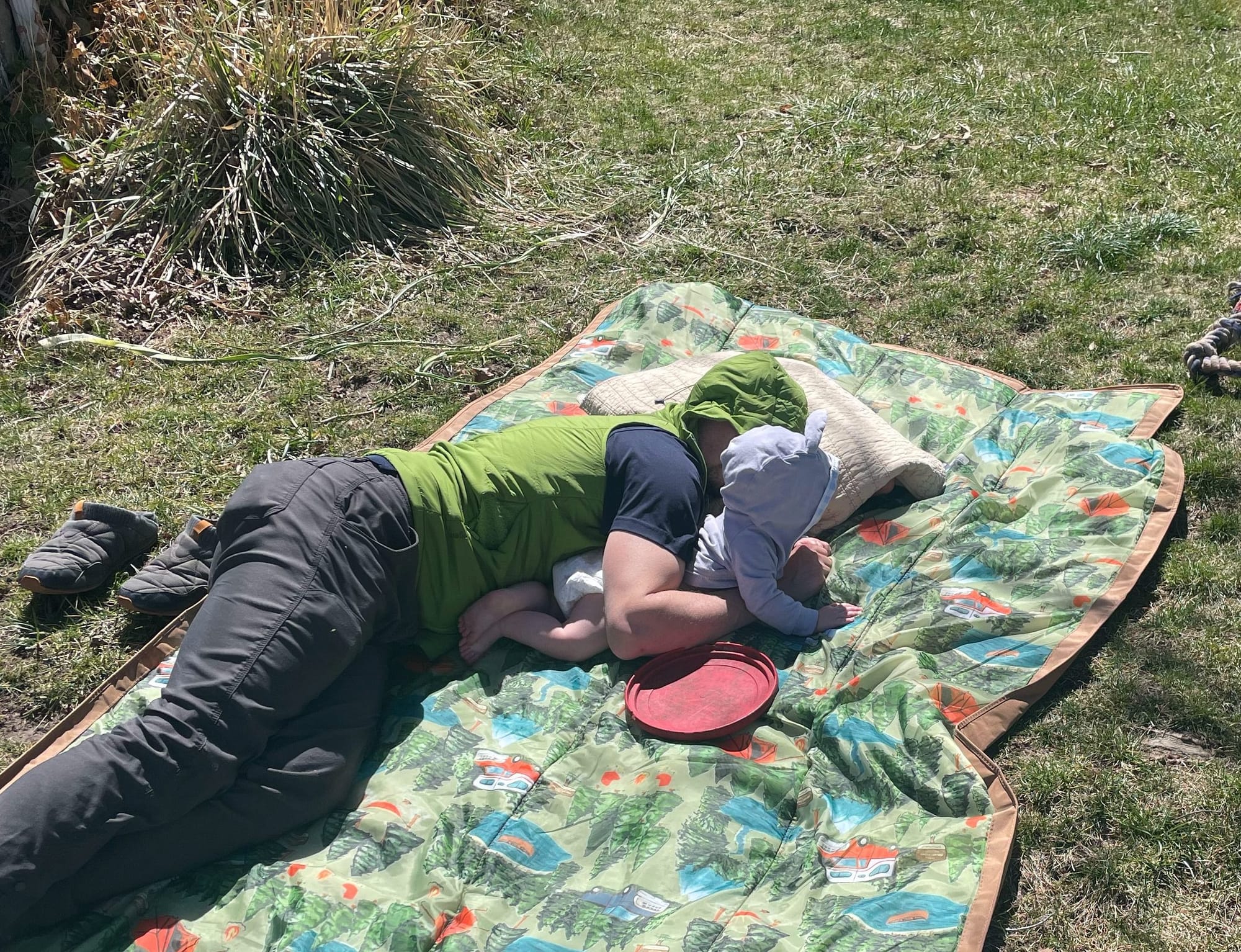
- Switch it up! Doing tummy time outside in the shade on a blanket was one of my favorite things to do on maternity leave with my son. Different environments can be helpful to keep babies engaged.
References:
https://www.choosept.com/health-tips/tummy-time-tips-for-parents
https://pathways.org/topics-of-development/tummy-time
Disclaimer: The information on this account is for educational purposes only and is not medical advice. Viewing or interacting with this content does not create a therapist-patient relationship. Every child is unique, and individualized recommendations require an appropriate evaluation. Always consult your own healthcare provider for concerns about your child and seek immediate medical care for emergencies.