Milestones & Motor Development · August 26, 2026 · 5 min read
Gross Motor Milestones by Age: A Guide From Birth to 3 Years
Written by Kristi Brelsford, DPT, PCS

By Dr. Kristi Brelsford, pediatric physical therapist and founder of The Village SLC

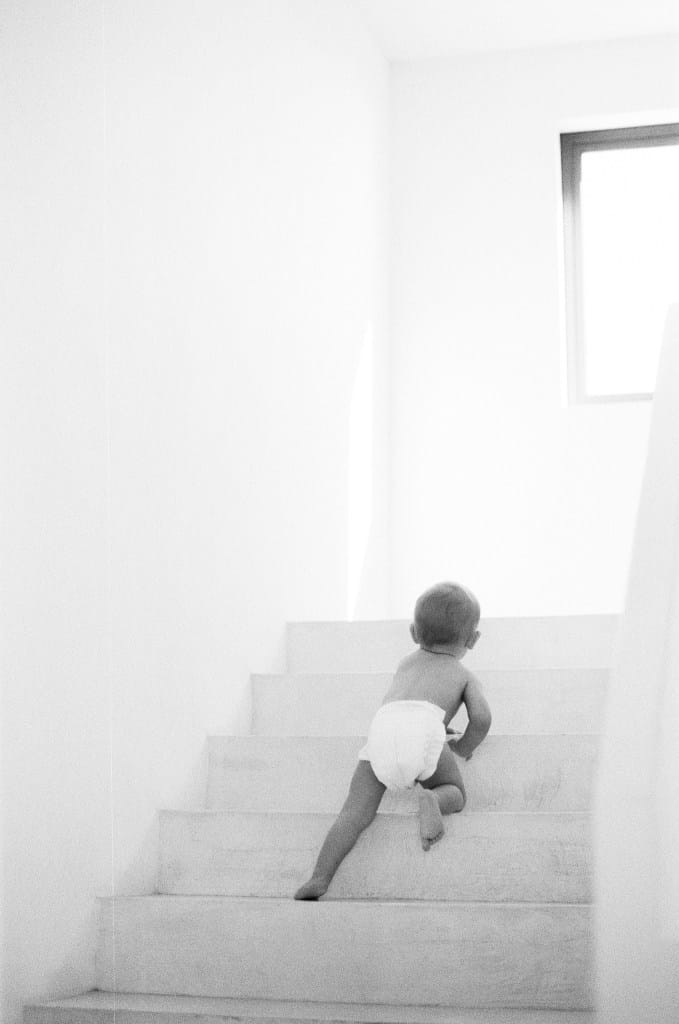
Here’s a parent’s guide to gross motor milestones by age — what to expect from birth to 3 years, and when a delay is worth a closer look.
What are gross motor milestones?
Gross motor milestones are physical skills involving large muscles of the body, creating movements such as rolling, crawling, walking, running, jumping, and climbing.
What are fine motor milestones?
Fine motor milestones are intricate skills using small muscles of hands, fingers, wrists to perform precise movements, such as grasping toys, bringing objects/utensils to mouth, building a block tower, and holding a crayon to color.
Understanding milestone age ranges
As a pediatric physical therapist, I have expertise with infant and pediatric gross motor milestones and body movements.
Every baby grows and learns at different rates. Every child, every human is unique!
I would like to give you some age ranges for certain movements and gross motor skills. The age ranges listed below describe when these skills are typically seen during motor development. These ranges are not exact by any means, but meant to be guidelines, so you have an idea of what to anticipate. If your child is not doing certain skills by certain ages you may be wondering about timelines and what are typical ranges.
Milestone timelines give you a jumping off point to ask more questions, to your pediatrician or a pediatric physical therapist. Your child may just need a little extra time to master a certain skill or they may really benefit from extra support, such as pediatric physical therapy.
“Wait and See” is not recommended! Delays can compound and some movement delays are easily and quickly addressed, especially when infants are young, before they have learned habits to compensate for asymmetric weakness or tightness. A pediatric physical therapist can complete an evaluation to address the whole body and assess what is needed! However, please do not stress about missed or delayed milestones, but instead use it as a clue to ask more questions and seek advice on whether your child may benefit from extra help or a referral to a provider or therapist.
Another important note on delayed motor milestones is the link between motor development and cognitive development. What is known: The younger the child’s age when attaining motor developmental milestones is positively linked to cognitive outcomes and academic success in adulthood. When infants first achieve independent mobility, usually initially with rolling, you can see the development of cause and effect and understanding they can make objects move or make things happen themselves. Babies learn they can go places and wheels really start turning in different ways once their independent mobility starts to grow.
Milestone trackers can be helpful (as long as they don’t stress you out!). My personal favorite is pathways.org because it has gross motor, fine motor, cognitive/speech and feeding milestones all in one place and it has accurate suggestions for activities and videos to help guide you. This milestone tracker is a free parent resource website and app. (I have no affiliation with pathways.org, but I did personally use it with my son. I found it to be very helpful personally and I’ve been recommending it for years to families of patients.)
0-3 months
- Follows objects/faces with eyes
- While on tummy, can lift and turn head (clear airway)
- While on tummy, props on elbows. (Skills like lifting the head and pushing up on elbows build directly on tummy time practice.)
- While on back, turns head to both sides and can keep it midline
- Reaches for objects at midline with hands (may be uncoordinated)
- Freely and symmetrically moving arms and legs (may start jerky but becoming more smooth)
4-6 months
- Grabs feet with hands, can bring feet to mouth or play with feet
- While on tummy can turn/pivot in a circle
- While on tummy can reach for toys with hands
- While on tummy, can push up through straight arms
- Rolling tummy to back and back to tummy (both ways)
- Keeps head upright when in supported sitting position or being held
- Puts weight through legs when placed in supported standing position
- Prop sit (using their hands to support self while sitting)
7-9 months
- Sit independently when placed in sitting position
- Sit and reach for toys without falling
- Army crawls on belly
- Pushes into hands and knees position (quadruped position)
- Transition in and out of sitting from tummy or back positions
- Crawls on hands and knees with alternate leg and arm movement
- Can pull self up onto knees into kneeling position
- Uses both hands equally to play with toys
10-12 months
- Crawls over obstacles
- Pulling to stand at a surface (like a couch, chair or crib)
- Sits down from supported standing
- Cruises along furniture (walks along furniture while holding on)
- Stands independently a couple of seconds
- Can walk while pushing a push walker or mini grocery cart
- May take some steps
13-15 months
- Gets into standing position and stands alone
- Walks independently
- Squats to pick up toys
- Walks while carrying objects
- Crawls up and down stairs
- Frequently moving in and out of various positions (climbing, cruising, walking, crawling)
16-18 months
- Climbs on low furniture
- Walks independently and rarely falls
- Able to throw balls without losing balance in standing
19-24 months
- Goes up and down stairs with support (in standing position)
- Kicks large ball
- Runs (can be uncoordinated, but trying to move faster than walking)
- Stands on tiptoes
- When walking, able to pull/drag toys behind them
25-36 months
- Jump with both feet leaving the ground
- Catches large balls
When should I schedule a PT evaluation?
- If a child is not following moving objects with their eyes and not supporting their head well by the end of their 3rd month (so by the time they turn 4 months old)
- If a child is not rolling (tummy to back and back to tummy) by the end of their 6th month (so by the time they turn 7 months old)
- If a child is not sitting independently (without hands) by the end of their 6th month (so by the time they turn 7 months old)
- If a child is not able to get in and out of sitting position by the end of their 9th month (so by the time they turn 10 months old)
- If a child is not cruising along furniture or pulling to stand by 12 months (so by the time they turn 13 months old)
- If a child is not independently walking by 16 months (so by the time they turn 17 months old)
- If a child cannot jump with both feet leaving the ground by 2 years (so by the time they turn 3 years old)
If you are in the Salt Lake Valley, I offer in-home visits and would love to work with you — reach out to get started!
References:
https://pathways.org/topics-of-development/motor-skills
Zhuo H, Xiao J, Tseng WL, Liew Z. Developmental Milestones of Infancy and Associations with Later Childhood Neurodevelopmental Outcomes in the Adolescent Brain Cognitive Development (ABCD) Study. Children (Basel). 2022;9(10):1424. Published 2022 Sep 20. doi:10.3390/children9101424
Flensborg-Madsen T, Mortensen EL. Predictors of motor developmental milestones during the first year of life. Eur J Pediatr. 2017;176(1):109-119. doi:10.1007/s00431-016-2817-4
Murray GK, Jones PB, Kuh D, Richards M. Infant developmental milestones and subsequent cognitive function. Ann Neurol. 2007;62(2):128-136. doi:10.1002/ana.21120
https://www.cdc.gov/act-early/milestones/1-year.html
https://www.healthychildren.org/English/MotorDelay/Pages/default.aspx
Disclaimer: The information on this account is for educational purposes only and is not medical advice. Viewing or interacting with this content does not create a therapist-patient relationship. Every child is unique, and individualized recommendations require an appropriate evaluation. Always consult your own healthcare provider for concerns about your child and seek immediate medical care for emergencies.